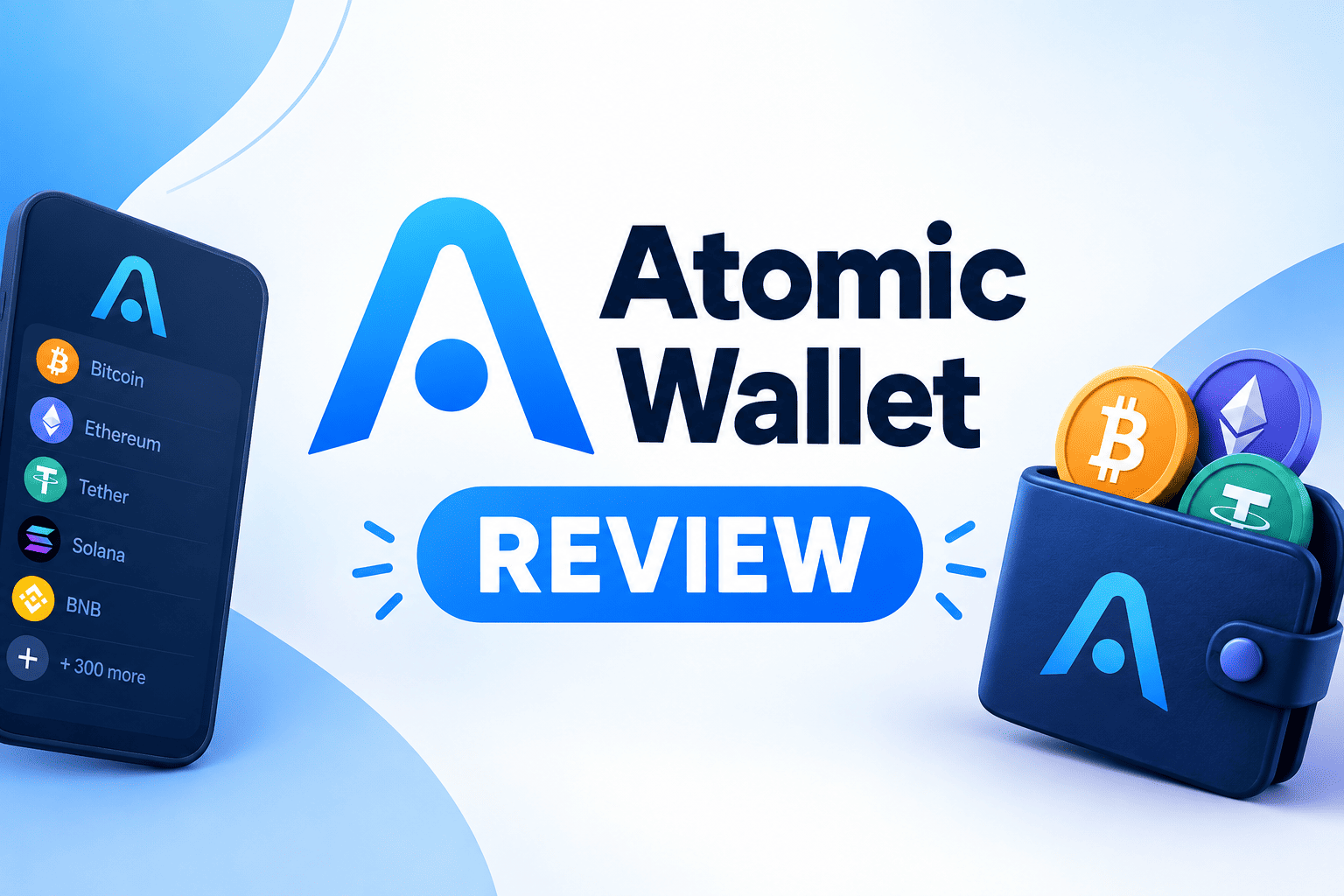
Atomic Wallet is a veteran non-custodial multi-currency wallet supporting over 300 cryptocurrencies, attracting a large user base with its clean interface and built-in swap feature.
However, the $100 million security breach in June 2023 continues to cast a long shadow over its reputation. My advice is straightforward: suitable for small everyday transactions, not for large or long-term storage.
What Is Atomic Wallet?
Atomic Wallet was developed by Evercode Lab, with founder Konstantin Gladych, a former co-founder and CEO of Changelly. The wallet officially launched on app stores on October 30, 2019, offering desktop, mobile, and browser extension versions.
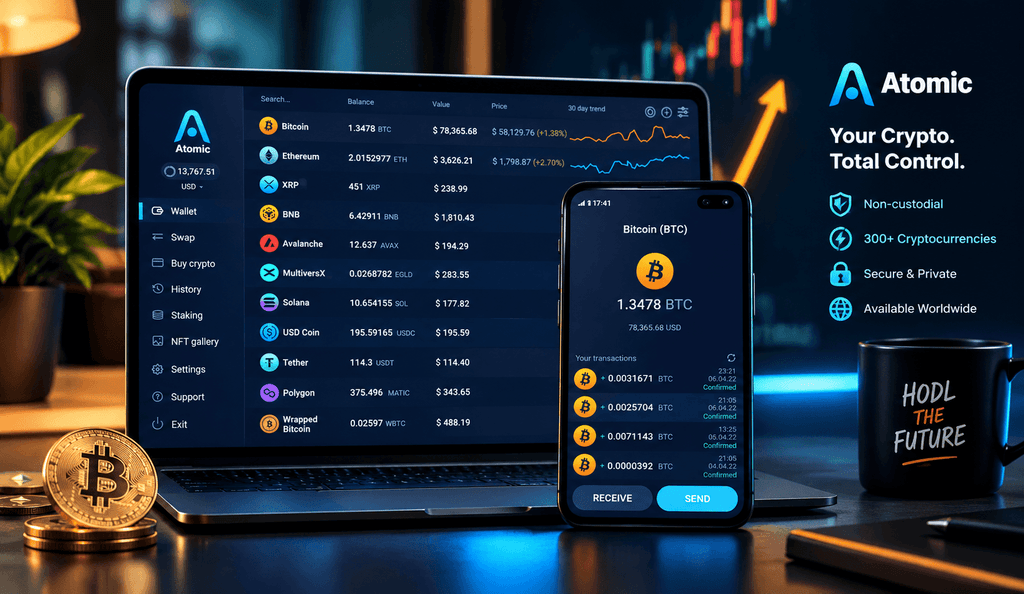
Its positioning is a “universal non-custodial wallet,” which means:
- You control the private keys: The 12-word mnemonic phrase is entirely in your hands. Atomic cannot freeze or access your assets.
- Multi-chain support: Covers Bitcoin, Ethereum, Solana, Monero, XRP, Cardano, Polkadot, Tron, Litecoin, Dogecoin, and other major networks, plus all ERC-20 and BEP-20 tokens.
- All-in-one functionality: Beyond sending and receiving assets, it includes built-in swaps, staking, crypto purchases, and even perpetual contract trading.
As of February 2026, Atomic Wallet holds a composite score of 3.2/5 on platforms like Trustpilot, based on over 14,600 reviews. But behind that number, praise and fury are equally intense.
Supported Assets and Core Features
Atomic Wallet’s asset coverage is one of its biggest selling points. Here are the main supported networks and asset types:
| Category | Representative Assets |
|---|---|
| Major blockchains | BTC, ETH, SOL, XRP, ADA, DOT, TRX, LTC, DOGE |
| Privacy coins | XMR (Monero), DASH |
| Smart contract platforms | BNB Chain, Avalanche, NEAR, Cosmos, Polygon |
| Token standards | All ERC-20, BEP-20, TRC-20 tokens |
| Emerging features | Perpetual contracts (BTC, ETH, SOL, and popular meme coins) |
Staking is another highlight. It supports on-chain staking for multiple assets. The first stake generates a separate staking address, but it remains controlled by your private keys. This means you can earn yield directly within the wallet without moving assets to a centralized platform.
Fee Structure:
Fees are what most users care about, and Atomic Wallet’s fee model has some opaque areas that deserve special attention.
Network Fees (Transfer Fees)
This is the fee paid to blockchain miners, and Atomic does not charge anything extra. The amount depends on network congestion: fees rise when the network is busy and drop when it is idle.
For EVM-compatible networks (such as Ethereum, Polygon, and BNB Chain), Atomic offers three tiers:
- Slow: Lowest fee, but confirmation time is unpredictable
- Standard: Moderate fee, usually confirmed within minutes
- Fast: Highest fee, nearly instant confirmation
There is also an easily overlooked detail: when sending ERC-20 tokens, your wallet must have enough ETH to cover the Gas fee, or the transaction cannot be completed. Similarly, TRC-20 tokens require TRX, and BEP-20 tokens require BNB.
Swap Fees
This is Atomic’s most controversial fee. Atomic does not disclose a fixed swap fee. The cost is embedded directly into the exchange rate shown at the time of swapping and is not listed separately. The “price” you see already includes the cost, but you cannot know exactly how much Atomic or the third-party provider earns from it.
Actual swaps are usually executed by third-party providers such as ChangeNOW, with Atomic primarily serving as the interface.
Bank Card Purchase Fees
When buying crypto directly with a bank card, Atomic charges a 5% markup, with a minimum of $10. This rate is significantly higher than mainstream centralized exchanges.
Security Record: The 2023 Hack
Any Atomic Wallet review that does not address the 2023 incident is dishonest.
What happened: In June 2023, more than 5,500 Atomic Wallet user accounts were compromised, with losses of approximately $100 million in cryptocurrency. The attacks were concentrated among users in Russia and CIS countries.
Root cause: Atomic never publicly confirmed the exact source of the vulnerability. After blockchain security firms Elliptic and ZachXBT traced the stolen funds, they linked the attack pattern to the Lazarus Group (a North Korea-backed hacking organization). But Atomic’s silence led many victims to believe it could have been an internal issue or serious negligence.
An even more concerning backdrop: More than a year before the hack (February 2022), renowned auditing firm Least Authority published an audit report explicitly recommending that users avoid the wallet until its security issues were resolved. Atomic promised to fix them but clearly did not complete the work before the attack.
Atomic’s response: The company forced users to update the app, migrated servers, and added binary checksums. But there was no comprehensive compensation plan, and some users received only case-by-case treatment.
Class-action litigation was still ongoing as of early 2026.
Current security status (2026): The vulnerability is said to have been patched, and no large-scale incidents have occurred since 2023. But Atomic remains closed-source software, meaning the code cannot be independently audited. Coin Bureau’s February 2026 review concluded: Atomic is acceptable as a convenience hot wallet, but not suitable for large or long-term holdings.
Real User Reviews: Praise and Fury at Two Extremes
Atomic Wallet’s user reviews show extreme polarization.
Positive Reviews (Mainly from Trustpilot)
As of 2026, Atomic Wallet has approximately 13,900 reviews on Trustpilot with a 4.1/5 rating. Typical feedback from supporters includes:
“Well-designed interface, easy to use, no serious problems over the years.” — Kevin Pierce
“Supports many assets, payment processing is extremely fast, rich NFT and staking features.” — Chris Mayrand
“Withdrawal fees are lower than other exchanges, and staking has no extra fees.” — Cryptovet
These positive reviews center on ease of use, asset diversity, and customer service responsiveness. Some users specifically mention that customer service provides “real human replies,” which is not common in the crypto industry.
Negative Reviews (From Reddit and Hack Victims)
The shadow of the hack lingers. On Reddit and Trustpilot, many victims describe a completely different experience:
“This company is a scam, designed to quickly and systematically steal user assets.”
“Historical tweets were deleted, and on Reddit, posts where users simply said ‘I lost all my savings’ were removed.” — Trustpilot user Jordan Thompson
Multiple sources point out that Atomic Wallet’s Reddit moderators systematically delete victim posts, and support requests receive automated generic replies. Some users also report being blocked by official social media accounts.
Third-Party Aggregate Scores
Setting aside potentially extreme reviews on Trustpilot, aggregating data across multiple platforms shows Atomic Wallet’s average rating at approximately 3.2/5 (based on 14,608 reviews). This score is closer to the median of real experience.
Pros and Cons:
Advantages
- Broad asset coverage: 300+ cryptocurrencies, with near-complete coverage of major blockchains and token standards
- Truly non-custodial: Private keys controlled by users; the wallet cannot freeze funds
- Smooth user experience: Clean interface, suitable for beginners to get started quickly
- Rich built-in features: Swaps, staking, crypto purchases, and perpetual contracts all in one place
- No KYC required: No mandatory identity verification, offering better privacy
Disadvantages
- Major 2023 security incident: $100 million stolen, trust repair remains a long road
- Closed-source software: Code cannot be audited; security relies on trust rather than verification
- Opaque fees: Swap fees hidden in exchange rates; actual costs unknown
- High bank card purchase fees: 5% markup, minimum $10
- Not suitable for large holdings: Multiple independent reviews recommend using it only as a small-balance hot wallet
Who Should Use Atomic Wallet?
Based on the above analysis, Atomic Wallet’s reasonable use cases are clear:
Suitable for:
- Users who need frequent small transactions across multiple chains
- People who want one-stop management of multiple tokens without installing several wallets
- Users interested in staking yields but unwilling to move to centralized platforms
- Users who need quick swaps and can accept fees embedded in exchange rates
Not suitable for:
- Users holding more than $1,000-$2,000 in assets (should use a hardware wallet)
- Long-term holders with strict security requirements
- Users who cannot accept closed-source software and the lack of independent audits
- Former users whose trust was damaged after the hack
Frequently Asked Questions (FAQ)
Is Atomic Wallet decentralized?
Yes. Atomic Wallet is a non-custodial wallet. Private keys are fully controlled by users, and the company cannot access your funds or freeze accounts. However, being non-custodial does not automatically mean a wallet is secure. The 2023 hack demonstrated that even non-custodial wallets can be compromised.
Which cryptocurrencies does Atomic Wallet support?
Atomic Wallet supports over 300 cryptocurrencies, including Bitcoin, Ethereum, Solana, Monero, XRP, Cardano, Polkadot, Tron, Litecoin, Dogecoin, and other major assets. It also supports numerous ERC-20, BEP-20, and TRC-20 tokens.
What are Atomic Wallet’s swap fees?
Atomic Wallet does not disclose a fixed swap fee rate. Instead, swap costs are incorporated into the exchange rate displayed when you make a transaction. This means you may not know the exact percentage cost of a swap in advance. This can be a disadvantage compared with some DEX aggregators that disclose their fees more clearly.
Is Atomic Wallet safe?
Atomic Wallet can be considered conditionally safe, but it carries security risks. The vulnerability associated with the 2023 incident was reportedly patched, but its closed-source nature limits independent verification of the wallet’s code. For small everyday use, it may be comparable to other hot wallets, while a hardware wallet is generally a safer choice for large cryptocurrency holdings.
Did victims of the 2023 hack receive compensation?
There was no comprehensive compensation program covering all affected users. Some users reported receiving partial compensation on a case-by-case basis, but the company did not establish a systematic compensation plan. Legal proceedings related to the incident have also continued.
How do I use Atomic Wallet’s staking feature?
To use Atomic Wallet’s staking feature, select a supported stakeable asset such as DOT, ATOM, or SOL, choose the staking option, and follow the instructions to select a validator where applicable. Staking transactions require network fees, and the staking process and available options can vary by cryptocurrency.
Does Atomic Wallet require KYC?
No. Atomic Wallet does not require mandatory identity verification to create and use a self-custody wallet. However, third-party services used to purchase cryptocurrency with a bank card or fiat payment method may require KYC or other identity verification.
Can I store large amounts of cryptocurrency in Atomic Wallet?
It is generally not recommended to keep large cryptocurrency holdings in a hot wallet such as Atomic Wallet. For significant amounts, a hardware wallet such as Ledger or Trezor, or another thoroughly audited wallet with strong security practices, can provide additional protection. The appropriate setup depends on your risk tolerance, security requirements, and how frequently you need to access your funds.
What We Think About It: Atomic Wallet’s convenience is genuinely impressive, but the 2023 incident is not “a thing of the past.” It is an ongoing security warning. If you decide to use it, treat it as a “pocket money wallet,” not a safe deposit box. Your keys, your responsibility.