Web3 wallets are no longer just places to park tokens, but they are the operating system for decentralized finance, NFT trading, on-chain identity, and staking yield. Choosing the wrong wallet in 2026 does not just cost convenience. It costs money through hidden swap spreads, weak staking economics, and exposure to contract-level risk.
This guide is built for readers of this crypto guide section who want a wallet they will not outgrow in six months. It covers eight wallets with real traction, transparent fee structures, and active staking markets.
The rankings below are based on public user metrics, on-chain fee data, staking yields, and sentiment from Reddit, Trustpilot, and crypto forums.
What Separates a Good Web3 Wallet in 2026
The baseline is self-custody. A wallet that holds your keys is not a wallet. It is a custodial account with extra steps. Beyond custody, four factors matter most:
- Fee transparency. A free wallet with a 0.85% swap spread is not free. The best wallets disclose the service fee before signing.
- Chain coverage without fragmentation. Multi-chain support is useful only if the wallet displays balances and approvals across networks in one view.
- Native staking versus third-party staking. Native staking routes rewards directly from the network. Third-party staking adds a layer of counterparty and fee risk.
- Security architecture. Transaction simulation, hardware wallet support, and open-source code are no longer premium features. They are the minimum.
The table below compares the eight wallets covered in this guide on launch, scale, staking economics, swap fees, and primary use case.
| Wallet | Launched | Users / Traction (2026) | Staking APY / APR | Swap Fee | Chains | Best For |
|---|---|---|---|---|---|---|
| MetaMask | 2016 | 30M+ MAU, 100M+ downloads | ETH ~2.2% to 4% gross | 0.875% | 18+ via Swaps | DeFi default and dApp compatibility |
| Trust Wallet | 2017 | 220M+ total users | ~7% average, up to 15% on ATOM | No platform fee, spread embedded | 100+ | Mobile multi-chain retail |
| Coinbase Wallet | 2018 | ~25M estimated users | ETH net ~1.95% after 35% commission | Up to 1% plus spread | 60+ | Beginners and Base L2 |
| Phantom | 2021 | 15M MAU steady, 17M peak | SOL 6% to 8%, PSOL 4% fee | 0.85% | 8 | Solana-first consumer DeFi |
| Ledger | 2014 | 8M+ devices sold | ETH ~3.2%, SOL ~6% | No platform fee, validator commission | Wide via Ledger Live | Long-term cold storage |
| Rabby | 2021 | ~2M MAU | No native staking | 0.25% | 100+ EVM | Security-first EVM power users |
| Exodus | 2015 | 1.4M MAU | ~7% average, 3% to 15% range | Spread markup | 50+ | Desktop and mobile simplicity |
| SafePal | 2018 | 30M+ users | Up to 10% on TRX | 0.2% | 100+ | Hardware-software hybrid |
1. MetaMask:
MetaMask launched in 2016 as an open-source browser extension for Ethereum. By 2026 it reports more than 100 million users worldwide and roughly 30 million monthly active users, making it the most widely integrated wallet in decentralized applications. That distribution is its moat.
Every EVM dApp tests against MetaMask first. For users who move across lending protocols, NFT marketplaces, and Layer 2 networks, the path of least resistance still runs through MetaMask.
The economics are less flattering. MetaMask Swaps charges a 0.875% service fee on in-wallet swaps, plus network gas and DEX spread. That is among the highest swap fees among major wallets.
Staking is available for Ethereum, but the advertised yield is modest. Native ETH staking through ConsenSys validators offers roughly 4% gross before a 10% fee on rewards, while liquid staking routes have delivered closer to 2.2% APY in 2026.
Online sentiment reflects that split. Reddit threads and review aggregators praise MetaMask as the “gateway to Web3” but regularly criticize gas estimation bugs and swap fees that are not obvious until the confirmation screen. One widely discussed complaint described paying close to $75 in fees on a $900 swap once the 0.875% service fee and gas were combined.
MetaMask is still the safest first wallet for EVM compatibility. It is not the cheapest wallet for active traders.
2. Trust Wallet:
Trust Wallet has become the largest self-custody wallet by total users, with more than 220 million users and support for over 100 blockchains. Its mobile-first design and deep BNB Chain and Tron integration make it the default wallet for retail users in emerging markets who transact primarily from a phone.
That scale matters for this guide because wallet choice is often a network effect problem. Trust Wallet’s dApp ecosystem and token coverage are wider than most competitors out of the box.
Staking economics are competitive on paper. Trust Wallet advertises an average staking APY of roughly 7%, with Solana around 5.4% and Cosmos assets reaching 15% APR depending on validator performance.
The wallet charges no platform staking commission, only the validator’s commission, which typically ranges from 0% to 10%. For BNB staking, the net APY has ranged from 3% to 5% with a seven-day unbonding period.
Fees are where Trust Wallet’s marketing and user experience diverge. The wallet promotes $0 fees on staking, buying, and swapping, but Reddit users and independent reviews report a 0.5% to 1% hidden swap spread embedded in quotes. Community sentiment is sharply divided. Some users praise the breadth of assets and mobile convenience. Others report staking yields appearing lower than on competing wallets for the same validators and complain about post-hack distrust following browser extension security incidents.
Trust Wallet is the strongest mobile multi-chain option, provided users check the quoted rate before swapping.
3. Coinbase Wallet:
Coinbase Wallet launched in 2018 after being rebranded from Toshi, the company’s earlier mobile dApp browser. It has an estimated 25 million users and supports more than 60 networks, with particularly deep integration into Base, Coinbase’s Layer 2 network.
For users who already hold assets on Coinbase’s centralized exchange, the self-custody wallet provides a familiar bridge into on-chain activity without a new seed phrase learning curve.
Staking through Coinbase Wallet is convenient but expensive. The wallet takes a 25% to 35% commission on ETH staking rewards, which leaves a net APY of roughly 1.95% to 2.08% on a gross yield near 3%. That is materially lower than native staking or liquid staking alternatives.
Swap fees can reach up to 1% through the DEX aggregator, on top of network costs and spread.
Reddit and Trustpilot reviews highlight a consistent theme: onboarding is easy, but support and reliability are weak points. Users report swap glitches, difficulty accessing assets when the wallet stops communicating with dApps, and frustration with token support exclusions.
Coinbase Wallet is best treated as a beginner-friendly Base and EVM wallet, not a primary staking vehicle. For users who prioritize a clean interface over fee optimization, it remains a reasonable entry point.
4. Phantom:
Phantom launched in 2021 as a Solana-only browser extension and has since expanded to eight networks, including Ethereum, Bitcoin, and Polygon. It reached nearly 17 million monthly active users at its peak and has settled into a 15 million MAU steady-state baseline, with roughly $25 billion in self-custodied assets.
That scale makes it the most important non-EVM wallet in the market and a critical piece of Solana’s consumer DeFi stack.
Staking is Phantom’s strongest feature. Native SOL staking yields 6% to 8% APY depending on validator selection, with a minimum stake of 0.01 SOL and a two-to-three-day unstaking period. Phantom’s liquid staking token, PSOL, charges 4% of rewards plus a 0.1% exit fee, which is competitive for users who want liquidity while staking. In-wallet swaps carry a 0.85% service fee on most pairs, plus network and bridge costs.
Reddit sentiment is split. Many users call Phantom’s user experience the best in self-custody crypto, particularly for NFT trading and Solana DeFi. Others question the authenticity of positive reviews and point to security incidents where users lost SOL after interacting with malicious applications.
Phantom is the best wallet for Solana-native users and NFT-first consumers. It is not the cheapest wallet for cross-chain swaps, but its staking interface and mobile experience justify the fee for active Solana users.
Also Read: Phantom Wallet Swap Guide
5. Ledger:
Ledger was founded in 2014 and has sold more than 8 million hardware devices across 180 countries, protecting an estimated 20% of the world’s crypto assets. It is not a hot wallet in the same category as MetaMask or Phantom, but it belongs in any serious Web3 wallet guide because it solves the problem software wallets cannot: private key exposure to an internet-connected device.
Ledger Live, the companion app, supports staking for Ethereum, Solana, Polkadot, Cosmos, and other proof-of-stake assets. Staking APY varies by network and validator, with Ethereum around 3.2%, Solana around 6%, and Polkadot reaching 15% before validator commission.
Ledger itself does not charge a platform staking fee. The cost comes from the hardware device, which ranges from $79 to $279, and from validator commissions that can run from 0.5% to 10% of rewards.
Reddit users generally describe Ledger as the right choice for large balances, with one user noting that moving DOT from an exchange to a Nano X took three minutes and immediately reduced counterparty risk. The trade-off is friction. Every transaction requires physical confirmation, and staking reward withdrawals can be delayed depending on the network.
Ledger is not a replacement for a daily hot wallet. It is the vault that makes a hot wallet strategy sustainable.
6. Rabby:
Rabby launched publicly in late 2021, built by the DeBank team as a direct response to MetaMask’s shortcomings in multi-chain portfolio management and transaction safety. It has roughly 2 million monthly active users, a fraction of MetaMask’s scale, but its users are disproportionately high-frequency DeFi participants who care about pre-trade simulation.
Rabby’s defining feature is a transaction simulation engine that decodes any contract call and shows the exact balance and allowance changes before a user signs. That feature alone has prevented countless approvals to malicious contracts.
Rabby does not offer native staking. Its economics are built around a 0.25% swap fee, which is significantly lower than MetaMask’s 0.875% and is included in the quoted rate rather than added as a separate line item.
The wallet supports over 100 EVM chains and displays balances across all networks in one view, which reduces the risk of signing a transaction on the wrong chain.
Reddit users widely praise Rabby as a “MetaMask upgrade” for security-conscious DeFi users, particularly for its approval management and simulation clarity. The main caution is distribution risk. Fake Rabby apps have appeared on the Apple App Store and drained roughly $1.6 million from users before being removed, according to Reddit reports cited in security reviews.
Rabby is the best hot wallet for EVM power users who value transaction safety over staking convenience. It is not a wallet for beginners, and it is not a staking wallet.
7. Exodus:
Exodus was founded in 2015 and has maintained a steady base of 1.4 million monthly active users as of late 2026. It supports more than 50 networks and is available on desktop, mobile, and as a browser extension. Its differentiator is user experience.
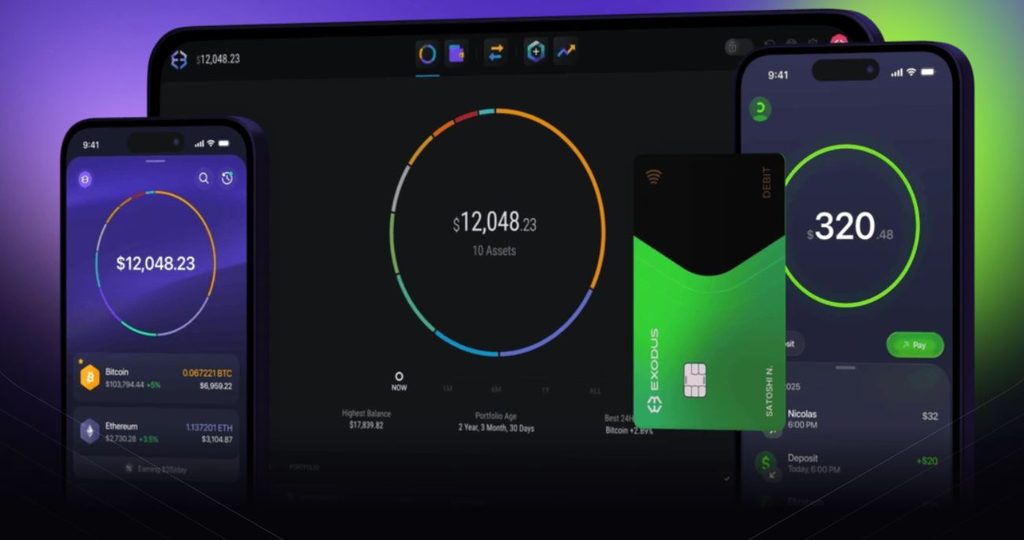
Exodus is one of the few self-custody wallets that feels like a consumer finance app rather than a developer tool, with a built-in exchange, portfolio tracking, and staking interface that does not require users to understand validator mechanics.
Staking yields range from roughly 3% to 15% APY depending on the asset, with an average around 7%. Exodus does not charge a platform staking fee. However, staking is routed through partners such as Everstake, and those partners charge commissions. Everstake’s Ethereum staking has carried a 10% fee on rewards, while its Solana staking has carried a 7% fee and delivered around 4.87% APR after costs.
The built-in exchange also charges a spread markup rather than a flat percentage fee, which makes cost comparison difficult for users who do not check the quoted rate against a market benchmark.
Reddit sentiment is moderate. Users generally consider Exodus safe for small to medium balances and praise the interface, but many recommend hardware wallets for larger holdings.
Exodus is the right wallet for users who want a polished desktop experience and are willing to pay for simplicity through spreads. It is not the wallet for fee-sensitive traders or users who demand native staking.
8. SafePal:
SafePal was founded in 2018 inside the Binance Labs incubator and has grown to more than 30 million users across its hardware and software wallet products.
It occupies a useful middle ground between Ledger and hot wallets. SafePal sells affordable hardware wallets, including the X1 and S1, and pairs them with a mobile app that supports over 100 blockchains. For users who want hardware-level key isolation without Ledger’s price point, SafePal is the most credible alternative.
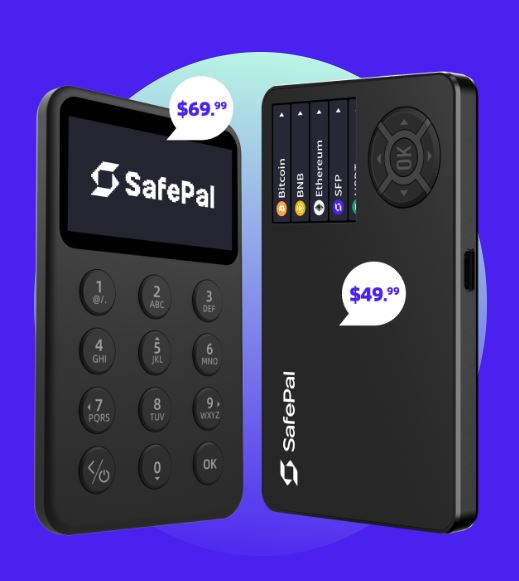
Staking is available through integrated partners and native network delegation. SafePal’s TRX staking offers up to 10% APY with no lock-up period and full non-custodial control. Other assets earn variable rates depending on the network. The wallet’s swap fee is 0.2%, which is among the lowest in this guide, though network gas and partner spreads still apply.
The trade-off is that SafePal’s staking coverage is narrower than Trust Wallet or Exodus, and some assets require third-party dApps rather than native in-wallet staking.
Community reviews are generally positive on price and hardware build quality, but SafePal does not have the same depth of Reddit discussion as MetaMask or Phantom. For users entering Web3 from a cost-sensitive market, SafePal offers the most accessible path to hardware-backed self-custody. It is not the best wallet for advanced DeFi users who need transaction simulation or deep EVM tooling.
How to Choose Without Overthinking It
The right wallet depends on what you do most. If you trade EVM DeFi daily, use Rabby for execution and Ledger for storage.
If you are Solana-native, Phantom is the default, with Ledger as the vault. If you are mobile-first and multi-chain, Trust Wallet covers the most ground. If you are new and already on Coinbase, Coinbase Wallet is the path of least resistance, provided you understand the staking commission.
There is no single wallet that wins on every axis. The professional move is to separate the wallet you use for transactions from the wallet you use for savings.
Frequently Asked Questions
Are Web3 wallets free?
Most software wallets are free to download and hold assets. The real cost comes from swap fees, network gas, staking commissions, and spreads. A “free” wallet with a 0.85% swap fee is more expensive for active traders than a wallet with a 0.25% fee.
Which Web3 wallet has the lowest fees?
Rabby has the lowest explicit swap fee among the wallets covered here at 0.25%. SafePal is close at 0.2% but has narrower staking coverage. Trust Wallet advertises no platform fee but embeds a spread in swap quotes.
Can I stake crypto in a Web3 wallet?
Yes. Phantom, Trust Wallet, Exodus, Ledger, and Coinbase Wallet all support staking. Rabby does not offer native staking. Staking APY varies by asset and validator, and platform commissions can reduce net yield significantly.
Is MetaMask still the best Web3 wallet?
MetaMask is the most compatible wallet for EVM dApps and the safest default for users who need universal support. It is not the cheapest wallet for swaps or staking. Users who prioritize fees or security simulation should consider Rabby or Phantom alongside MetaMask.
Do I need a hardware wallet?
For balances large enough that a software wallet compromise would be financially painful, yes. Ledger and SafePal provide hardware-backed key isolation. A common setup is a hot wallet for daily transactions and a hardware wallet for long-term holdings.
Which wallet is best for Solana?
Phantom is the most widely used Solana wallet, with native SOL staking, NFT tools, and a clean mobile experience. Ledger supports Solana staking through Ledger Live for users who want hardware security.
Are Web3 wallets safe?
Self-custody wallets are as safe as the user’s operational security. Seed phrase leaks, malicious approvals, and fake wallet apps are the most common loss vectors. Transaction simulation, hardware confirmation, and approval management reduce risk but do not eliminate it.
What happens if a wallet shuts down?
Because self-custody wallets store keys on the user’s device, a wallet shutdown does not necessarily mean lost funds. Users can restore their seed phrase in a compatible wallet. The risk is highest with wallets that use non-standard key derivation or seedless architectures.