I have been involved in crypto for long enough to know what “just a JPEG” means with regards to NFTs. This was before an artwork made up of several digital images sold for more than most physical galleries earn in a decade. If you’re reading this, chances are that you are trying to filter out the noise.
You want to know what the real benchmarks are, not just the hype.
This guide cuts through the speculation. We are going to look at the most expensive NFT sales ever recorded, the platforms that facilitated them, and the specific mechanics that drove those valuations. I’ll also break down what the collector community actually says about these platforms and where this asset class is heading.
No fluff, just the data and context you need to understand the ceiling of this market.
Top 10 Most Expensive NFT Sales
The market has matured, but the top tier remains dominated by a few key players: Beeple, Pak, and the CryptoPunks collection. Here is the definitive list based on verified public sales data.
| Rank | NFT / Collection | Artist / Creator | Sale Price (USD) | Year | Platform / Auction House |
|---|---|---|---|---|---|
| 1 | The Merge | Pak | $91.8 Million | 2021 | Nifty Gateway |
| 2 | Everydays: The First 5000 Days | Beeple | $69.3 Million | 2021 | Christie’s |
| 3 | Clock | Pak & Julian Assange | $52.7 Million | 2022 | AssangeDAO (Network) |
| 4 | HUMAN ONE | Beeple | $28.9 Million | 2021 | Christie’s |
| 5 | CryptoPunk #5822 | Larva Labs | $23.7 Million | 2022 | Larva Labs (Direct) |
| 6 | CryptoPunk #7523 | Larva Labs | $11.75 Million | 2021 | Sotheby’s |
| 7 | CryptoPunk #4156 | Larva Labs | $10.26 Million | 2021 | Secondary Market |
| 8 | CryptoPunk #5577 | Larva Labs | $7.7 Million | 2022 | Secondary Market |
| 9 | CryptoPunk #3100 | Larva Labs | $7.58 Million | 2021 | Secondary Market |
| 10 | CryptoPunk #7804 | Larva Labs | $7.57 Million | 2021 | Secondary Market |
Note: The Merge is a unique case. It was sold to nearly 29,000 collectors who purchased “blocks” that combined into a single asset, making it the most expensive NFT by total valuation, though not a single-wallet purchase .
List of NFT Projects:
1. Pak’s “The Merge” and the Nifty Gateway Experiment
Launched in December 2021, The Merge was a conceptual masterpiece. It challenged the very idea of a single-owner NFT. The artist Pak released the work as an open edition where buyers purchased mass units. Over 28,983 collectors bought in, driving the total value to $91.8 million.
The most expensive NFT ever wasn't a single image
— Swapped.com (@swappedcom) April 23, 2026
“The Merge” by Pak sold for $91.8M in 2021
Thousands of people bought pieces of it, now you can download it for free pic.twitter.com/KVsTpekU2M
The USP was the fractionalized ownership model. The artwork was dynamic and merged visually as more units were purchased. It was a commentary on the collective nature of the crypto community.
This sale proved that value could be aggregated across a massive user base rather than relying on a single whale. It validated the “crowd-owned” art thesis.
On platforms like Reddit (r/NFT), the sentiment around Nifty Gateway for this drop was mixed. While users praised the innovation, there were historical complaints regarding Nifty Gateway’s platform stability during high-traffic drops and customer service responsiveness during the 2021 boom. However, for The Merge, the execution was viewed as a watershed moment for community-driven art.
2. Beeple’s “Everydays” and Christie’s
Minted exclusively for Christie’s, this piece is a collage of 5,000 daily images Beeple created over 13.5 years. It sold for $69.3 million in March 2021.
The sheer historical weight. This was the first purely digital NFT sold by a major legacy auction house. It represented the “bridge” moment between traditional fine art and blockchain.
An Indian programmer paid $69 million for a JPEG and told the world it would be worth $1 billion. His fund collapsed. He still owns it and has gone completely silent.
— Aisar (@aisarcore) April 30, 2026
— In March 2021 Vignesh Sundaresan known as Metakovan paid $69.3 million for a digital artwork called Everydays.… pic.twitter.com/rr6XTz85NT
It legitimized crypto art in the eyes of the traditional art world. As Beeple himself noted, it proved that digital artists could finally “own and collect” their work.
While the crypto community cheered, traditional art forums (like WetCanvas) were highly skeptical, often debating the “intrinsic value” of digital files. However, on Crypto Twitter, the sale is still referenced as the moment the market “went parabolic.”
3. Pak & Julian Assange’s “Clock” and the DAO
Released in February 2022, Clock is a dynamic NFT showing the number of days Julian Assange had been imprisoned. It was sold to fund his legal defense.
3️⃣ Pak and Julian Assange's 'Clock'
— MANI (@Mani_NFTz) August 7, 2023
Price: $52.7 million
Date: February 2022 pic.twitter.com/sMWDAbyAzq
The utility as a protest tool and the use of a DAO (Decentralized Autonomous Organization). The AssangeDAO pooled funds from over 10,000 supporters to win the auction for $52.7 million. This demonstrated the power of social coordination via blockchain. It wasn’t just art collecting; it was political activism financed by crypto.
Discussions on BitcoinTalk and Reddit’s r/CryptoCurrency highlighted the efficiency of the DAO structure. While some users were wary of the DAO’s long-term legal standing, the consensus was that the mechanism worked flawlessly for pooling capital quickly.
4. Beeple’s “HUMAN ONE” and the Hybrid Model
Launch and Traction: Sold at Christie’s in November 2021 for $28.9 million, HUMAN ONE is a physical sculpture (a box with LED screens) combined with an NFT.
Beeple retains the ability to update the digital video content remotely via the blockchain. The owner owns the physical piece, but the artist controls the evolving digital narrative. This challenged the definition of “finished” art. It introduced the concept of a living, breathing digital asset that changes over time.
On ArtStation and digital art forums, the reception was largely positive regarding the technical achievement. However, some collectors on Reddit expressed discomfort with the idea of the artist retaining “remote control” over the asset post-sale, viewing it as a potential security or exclusivity risk.
5. The CryptoPunks Legacy (Larva Labs)
Launch and Traction: Launched in 2017 for free, CryptoPunks are the blue-chip standard of NFTs. The top sales include #5822 ($23.7M), #7523 ($11.75M), and #4156 ($10.26M).
There are only 10,000, and only 9 “Alien” types. Owning a Punk is a digital flex equivalent to wearing a Rolex in a boardroom.
CryptoPunks proved that generative art could have lasting value. They are the bedrock of the PFP (Profile Picture) sector.
Reddit’s r/CryptoPunks is a dedicated community that tracks sales meticulously. The sentiment is generally “diamond hands.” However, there is often frustration in broader NFT forums (like r/OpenSea) regarding the high gas fees associated with bidding on Punks during network congestion, though this is a critique of Ethereum, not the asset itself.
The Future Importance of NFTs
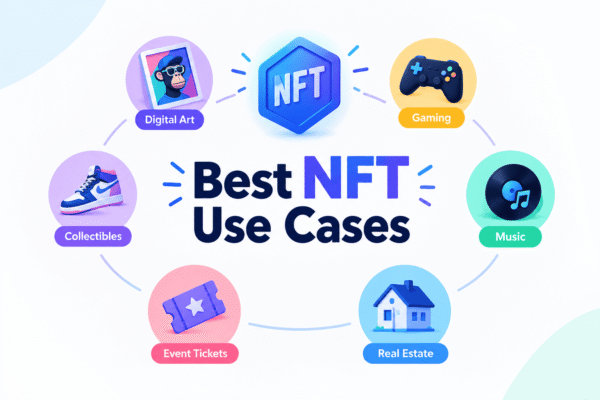
If you look past the profile pictures, the future of NFTs lies in utility and identity. We are moving toward a world where your digital wallet acts as your passport.
- Token-Gated Access: Imagine exclusive Discord channels, events, or software access based on the NFTs you hold. This is already happening in premium communities.
- Real-World Asset (RWA) Tokenization: NFTs will represent fractional ownership of physical assets like real estate or fine wine, solving liquidity issues in traditional markets.
- Digital Identity: In the Metaverse (or whatever spatial internet becomes), your NFT avatar and wearables will be portable across platforms, not locked to a single game.
The days of speculative PFP flipping are consolidating. The future belongs to NFTs that do something, whether that is proving provenance for luxury goods or granting access to a community.
Frequently Asked Questions (FAQs)
1. What is the single most expensive NFT ever sold?
By total sale valuation, Pak’s The Merge sold for $91.8 million in December 2021 through a system in which nearly 29,000 buyers purchased units. The highest-priced single NFT purchase is Beeple’s Everydays: The First 5000 Days, which sold for approximately $69.3 million at Christie’s in March 2021.
2. Why did CryptoPunks sell for millions if they are just pixel art?
CryptoPunks gained value through their early history on Ethereum, limited supply, cultural significance, and strong collector recognition. For some buyers, owning a CryptoPunk is like owning an early piece of internet and crypto history. However, prices depend on demand, rarity, market conditions, and sentiment, so historical importance does not guarantee future value.
3. Can I still buy a cheap NFT that might become valuable?
Yes, lower-priced NFTs are still available, but identifying one that will appreciate is difficult. You can research emerging artists and collections on platforms such as Foundation or SuperRare, where available. Look at the creator’s track record, genuine community interest, trading activity, and any practical utility. Only invest money you can afford to lose.
4. What happens if the platform where I bought my NFT shuts down?
If the NFT is recorded on a blockchain and you control the wallet holding it, your token ownership generally remains recorded even if the marketplace shuts down. However, access to the associated artwork or metadata may be affected if it relies on a discontinued service. You may be able to view or trade the NFT through compatible wallets and marketplaces, depending on its contract and technical support.
5. Are the high gas fees worth it for expensive NFTs?
For a high-value NFT purchase, network fees may represent a relatively small percentage of the total price. For inexpensive NFTs, however, gas fees can make a transaction uneconomical. Ethereum layer-2 networks and alternative blockchains can offer lower fees, although costs vary with network demand and transaction complexity. Always check the total cost before confirming a purchase.
6. How do I verify the authenticity of a high-value NFT?
Verify the collection’s official smart contract address using the creator’s verified website or official social channels, then inspect the address on a block explorer such as Etherscan. Check the token ID, collection details, ownership history, and metadata. Never rely on the image alone, since counterfeit collections can copy genuine artwork. For expensive purchases, obtain independent verification before sending funds.
7. What is the role of DAOs in expensive NFT sales?
Decentralized autonomous organizations (DAOs) allow communities to pool funds, subject to their governance rules, to purchase high-value NFTs. Members may vote on acquisitions and decisions about the assets. For example, ConstitutionDAO raised funds to bid on a rare copy of the U.S. Constitution but did not win the auction. Shared ownership can broaden participation, although governance and legal arrangements vary.
8. Is the NFT market dead?
No, but the market has evolved since the speculative boom of 2021. Collectible artwork and profile-picture NFTs remain part of the ecosystem, alongside gaming assets, digital memberships, and tokenized real-world assets. Activity and liquidity vary considerably across projects. NFTs remain risky, and renewed interest in a particular use case does not guarantee that an individual collection will increase in value.