If you are still judging NFTs solely by profile pictures and million-dollar JPEG sales, you are looking at a market that matured years ago. I have been in crypto since the Mt. Gox era, and I have watched countless “next big things” fade into irrelevance. NFTs are different, but not for the reasons the 2021 hype cycle sold you.
The reality is that the speculative bubble burst, and what remained was infrastructure.
The World Economic Forum notes that while transaction volumes plummeted after the 2022 crash, major brands like Prada and Starbucks continued building because the underlying utility, proof of ownership, token-gated access, and digital identity, never disappeared . Today, the most compelling NFT use cases are not about flipping art. They are about solving real problems in sports fandom, wireless infrastructure, and digital identity.
Here is a pragmatic look at the platforms and use cases that are actually generating traction, the risks involved, and what the future holds.
The Evolution: From Quantum to Utility
The first NFT, Quantum, was minted in 2014 on Namecoin, but the technology remained a niche experiment for years . The turning point was 2017 when CryptoPunks launched on Ethereum. Larva Labs created 10,000 unique 24×24 pixel characters, initially giving them away for free.
Nobody knew it then, but this project became the Rosetta Stone for digital ownership. It proved that scarcity could be programmed and that communities would form around digital identities.
The 2021 boom, driven by Beeple’s $69 million Christie’s sale and the Bored Ape Yacht Club (BAYC), was the hype phase.
But the crash that followed was necessary. It flushed out the grifters and forced builders to focus on sustainable models. As a professional, I advise you to ignore the floor prices of blue-chip PFP collections and look at the usage metrics of the platforms below.
CryptoPunks: The Cultural Benchmark and Identity Layer
Launched on June 2017, it is the first widely recognized NFT collection and the prototype for the ERC-721 standard.
CryptoPunks are not just art; they are historical artifacts. They proved that digital collectibles could command institutional respect. Pieces are held by LACMA, Centre Pompidou, and MoMA .
Real Use Case: While often viewed as a store of value, their primary utility is digital identity and social signaling. Holding a Punk grants access to a specific tier of the crypto community. It is the digital equivalent of wearing a bespoke suit to a finance meeting.
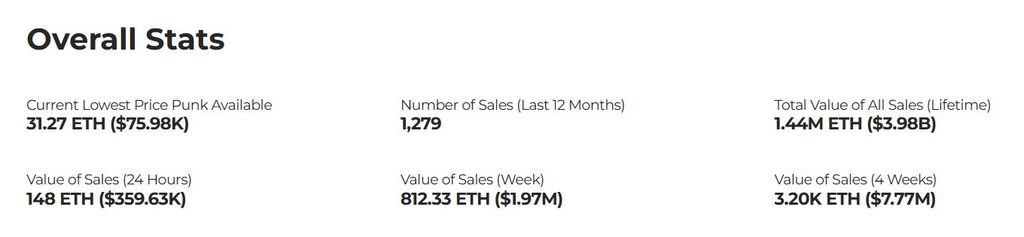
Reddit and crypto Twitter frequently debate the “boomer” status of Punks versus newer collections. However, the consensus on forums like r/CryptoCurrency is that Punks remain the most resilient “blue chip” because of their historical provenance, even if liquidity has thinned.
In 2025, the IP transitioned to the Infinite Node Foundation, ensuring preservation. Expect Punks to become collateral in decentralized finance (DeFi) and the bedrock of on-chain reputation systems.
Sorare: The Fantasy Sports Engine
Launch Date: 2019
A fantasy football (soccer) and baseball game where user-owned NFTs represent player cards. Sorare is proof that NFTs can function as in-game assets with real utility rather than passive collectibles. You actively use the NFT to compete and win rewards.
As of late 2026, Sorare reported net revenue growth of 85% year-over-year. More than 100,000 managers purchased cards in the first half of 2026, and the platform has over 2 million users across 185 countries with partnerships including La Liga, Bundesliga, and the NBA .
On Reddit’s r/Sorare, the sentiment is mixed but maturing. Early users complain about the shift toward a “pay-to-win” meta and the complexity of the market. However, the launch of Sorare Arcade (a free-to-play mode) has been widely praised on forums as a genuine onboarding tool for new users who cannot afford expensive cards .
Sorare is moving toward fractional ownership and in-stadium utility, where owning a card might unlock physical merchandise or VIP experiences at partnered clubs.
ENS (Ethereum Name Service): Infrastructure
Launched: 2017
Its main USP is decentralized naming for wallets and websites. It turns a 42-character hex address into yourname.eth.
This is arguably the most practical NFT use case for the average user. It reduces the risk of sending funds to the wrong address and serves as a portable Web3 identity.
ENS has surpassed 1.5 million names registered. It is integrated into almost every major wallet and app. When you see a decentralized website or a smart contract, it often relies on ENS for resolution.
Reddit and developer forums highlight ENS as a “no-brainer” utility project. The main critique is regarding squatting. Academic research indicates that a small number of addresses hold thousands of trademarked or typo-squatted names, hoping to sell them later.
However, the ENS DAO continues to adjust pricing to discourage speculative hoarding. ENSv2 will bring layer-2 scalability, making subdomains cheaper and enabling complex identity structures (e.g., wallet.yourcompany.eth).
Helium: The DePIN Use Case
Launched: 2019 (Helium Network), NFT integration via hotspots.
A decentralized wireless network where individuals own and operate hotspots. While Helium uses fungible tokens (HNT) for rewards, the Hotspot NFTs (represented as NFTs on-chain) serve as the proof of ownership and license to earn.
Helium demonstrates how NFTs can represent physical infrastructure. It creates a tangible link between a digital token and a real-world device providing coverage.
Traction: Over 140,000 mobile hotspots are deployed worldwide, serving nearly 3.5 million people daily in the US alone. It has partnerships with AT&T, T-Mobile, and Telefónica .
The r/HeliumNetwork subreddit is a mix of enthusiasm and frustration. Early miners who bought hotspots during the 2021 peak complained about declining rewards due to network saturation. However, recent sentiment has improved significantly as the focus shifts from “mining rewards” to actual data offload from major carriers, which generates real revenue .
Future: The expansion into 5G and Wi-Fi offloading for major carriers is the key growth vector. The NFT (Hotspot) becomes a productive asset class.
A Cautionary Tale:
Launched: 2019
Fractional ownership of US rental properties via NFTs. RealT was the poster child for tokenized real-world assets (RWA). It allowed investors to buy a slice of a Detroit rental property for as little as $50 and receive daily rent in stablecoins .
Traction: Before its collapse, RealT tokenized over 700 properties worth approximately $130 million .
In July 2026, RealT announced voluntary liquidation. The City of Detroit filed a nuisance abatement lawsuit covering over 400 properties. Rent distributions were suspended in February 2026, and the escrow account held only ~$640,000 for an estimated 14,000 to 22,000 investors .
This is critical for your due diligence. Blockchain solves transfer and ownership verification. It does not solve property management, tax compliance, or physical maintenance. The community on r/CryptoCurrency widely cites RealT as a warning: “Code is law” does not protect you from a leaking roof or a local government lawsuit.
Future Overview: While RealT failed operationally, the RWA narrative is not dead. Expect future projects to use legal wrappers (LLCs) more rigorously and partner with established property managers rather than trying to reinvent the wheel.
Bored Ape Yacht Club (BAYC): The Community Experiment
Launched: April 2021
A status symbol and access pass to a massive ecosystem (ApeCoin, Otherside metaverse). BAYC proved that an NFT could be a membership card. It pioneered the “commercial rights” model, allowing holders to use their ape’s image for business ventures.
Traction: After a brutal bear market, BAYC floor prices showed signs of life in 2026, climbing from roughly 5 ETH to over 10 ETH within a month, while ApeCoin rallied . Yuga Labs’ CEO noted that prices had become disconnected from growing holder participation during the downturn .
The community sentiments on Reddit and Discord is heavily dependent on the floor price. When prices drop, the community feels “rugged.” However, the Otherside metaverse and the ApeChain development continue to attract developers. The USP remains the network effect; it is the closest thing crypto has to a country club.
The pivot toward gaming and metaverse interoperability is the main bet. If the Otherside delivers a compelling experience, the NFT acts as a passport.
The Future of NFTs:
Looking ahead, the speculative frenzy is gone, but the utility is deepening. Here are the use cases I am watching:
- Token-Bound Accounts (ERC-6551): This standard allows an NFT to own other assets. Imagine a character NFT that owns its own sword, shield, and gold. This is massive for gaming.
- Loyalty and Ticketing: Starbucks and Prada have already experimented with this . Expect to see NFT-based season passes for sports teams that unlock dynamic perks based on team performance.
- Digital Passports for AI Agents: As AI agents become more prevalent, NFTs can serve as their immutable identity and reputation score on-chain.
Frequently Asked Questions (FAQs)
1. Are NFTs dead?
No, NFTs are not dead, but the speculative hype that peaked in 2021 has cooled significantly. NFTs continue to serve purposes in gaming, digital identity, and decentralized infrastructure. Projects such as Sorare, Ethereum Name Service (ENS), and Helium illustrate different applications. However, adoption and trading activity vary by project, and claims about market growth should be checked against current data.
2. What is the most practical NFT use case today?
ENS Domains are a practical example of NFT-based infrastructure. They can connect complex blockchain addresses with human-readable names, making certain crypto interactions easier. Unlike purely collectible NFTs, ENS names can serve a functional purpose. Registration numbers change over time, so verify the latest figures through official ENS statistics before relying on a specific total.
3. How do I verify if an NFT project is legitimate?
Look beyond the project’s roadmap and promotional claims. Check the holder distribution, verify the smart contract address using an explorer such as Etherscan, review transaction history, and investigate whether the project has genuine users. A wallet holding a large share of the supply can create concentration risk, although some contracts and marketplaces naturally hold pooled assets. Be cautious of guaranteed returns, vague utility, and pressure to invest quickly.
4. Can NFTs represent real estate?
Yes. NFTs and other blockchain tokens can represent interests associated with real estate, depending on the legal structure. However, owning a token does not automatically mean you legally own the property itself. Ownership rights, local laws, company structures, property management, and redemption conditions all matter. Review the legal documents and seek independent legal advice before investing in tokenized real estate.
5. What is a “Blue Chip” NFT?
A blue-chip NFT generally refers to a collection with strong recognition, an established history, and relatively high demand compared with other NFT projects. CryptoPunks and Bored Ape Yacht Club (BAYC) have historically been considered examples. The term is subjective, however, and does not guarantee stable prices. Evaluate liquidity, trading volume, community strength, utility, and the project’s long-term sustainability rather than relying only on its floor price.
6. Are NFTs bad for the environment?
The environmental impact depends on the blockchain and its consensus mechanism. Ethereum’s transition from Proof of Work to Proof of Stake in September 2022 reduced its energy consumption by approximately 99.95%, according to Ethereum’s published estimates. Many NFT transactions also take place on Proof-of-Stake networks and layer-2 solutions. Their environmental impact is lower in many cases, but it is not accurate to say every NFT has zero environmental cost.
7. What is the biggest risk with NFTs?
Operational and financial risk are major concerns. An NFT may depend on a company, property manager, website, storage provider, or other service that can fail. Tokenization does not eliminate the risks associated with the underlying asset. Buyers should understand who manages the project, what rights the token provides, how its metadata is stored, and whether there is a practical way to sell or redeem it.
8. How do NFTs help creators?
NFTs can help creators sell digital artwork, collectibles, memberships, and other assets directly to buyers. Some NFT marketplaces and smart contracts support creator royalties on secondary sales. However, royalties are not guaranteed across every marketplace or blockchain, and enforcement depends on the platform, contract design, and trading method. Creators should review the royalty policy before minting an NFT and avoid assuming that every resale will generate income.
Disclaimer: This article is for informational purposes only and does not constitute financial advice. The crypto market is volatile, and you should do your own research before investing.