
The UK crypto market has matured into one of the world’s most closely watched regulatory theatres. With roughly 7 million British adults holding digital assets and the FCA’s financial promotion regime reshaping how platforms operate, choosing an exchange in 2026 is less about hype and more about fees, custody, staking yields, and whether the entity behind the app actually holds the right permissions.
This guide cuts through the marketing and examines eight platforms that UK traders genuinely use, with launch dates, user traction, staking rates, fee structures, and the unfiltered sentiment from Reddit and independent review forums.
Top Rated Crypto Exchanges In United Kingdom
Kraken
Launched in 2011, Kraken is the longest-running major exchange still standing, with over 10 million global users and a meaningful UK footprint. It holds an FCA electronic money institution licence and is listed on the cryptoasset register, giving UK users a regulated GBP on-ramp.
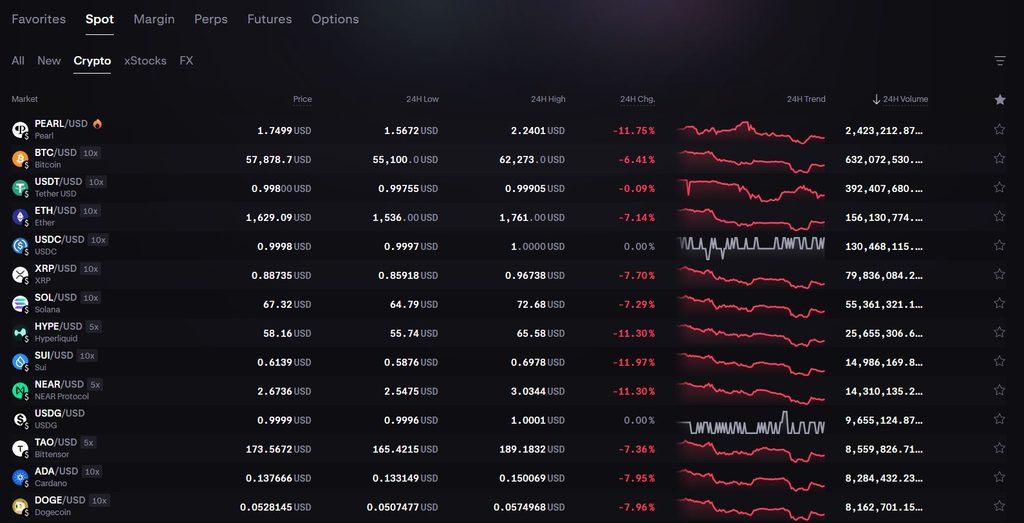
Staking is Kraken’s quiet weapon. UK users can stake ETH at roughly 3% to 4% APY, SOL at 6% to 8%, and ADA at 2% to 4%, with rewards paid twice weekly and no network fees deducted for staking or unstaking. Trading fees on the standard interface start at 0.25% maker and 0.40% taker, while Kraken Pro drops to 0.16% maker and 0.26% taker for low-volume users.
Reddit sentiment is notably positive on security and staking. One long-term user on r/Kraken wrote: “One of the few regulated exchanges where I feel genuinely comfortable leaving a significant position”.
The recurring complaint is customer support responsiveness, not custody. For UK traders who prioritise proof of reserves and regulated fiat rails, Kraken remains the benchmark.
Coinbase
Founded in 2012 and listed on NASDAQ, Coinbase is the most recognisable crypto brand in the UK, with 7 million UK adults holding crypto according to FCA data, a large share of whom onboard through Coinbase’s GBP rails. Its UK entity, CB Payments Ltd, is FCA-registered as an e-money institution and on the cryptoasset register.
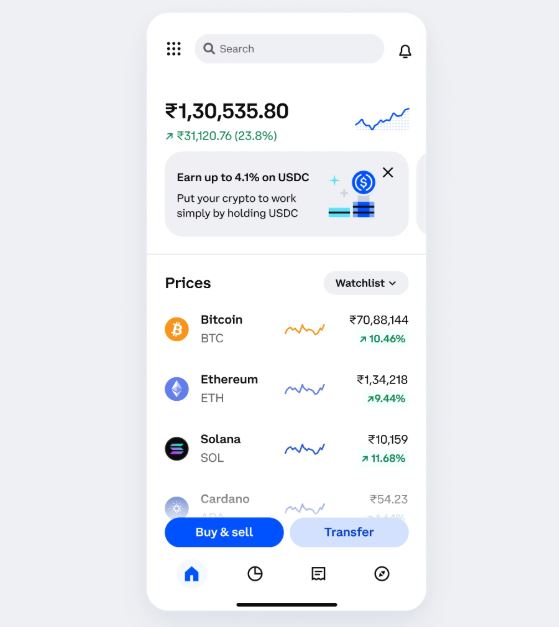
Fees are Coinbase’s Achilles heel. Standard purchases cost 1.49% to 3.99% depending on payment method, while Coinbase Advanced uses a maker-taker model starting around 0.4% maker and 0.6% taker, dropping to 0.25% maker and 0.50% taker for UK and EU entry tiers.
Staking is available on selected assets, with ETH net APY around 2% to 2.5% after Coinbase’s commission, and SOL net APY around 5.5%, though the platform takes a 25% to 35% cut of gross rewards.
What Online Community Says About Coinbase Exchange?
Reddit tells a split story. Beginners praise the interface and Learn & Earn programme, but fee-sensitive users on r/CryptoCurrency repeatedly warn that simple buys are expensive and that Advanced should be the default. Coinbase’s S&P 500 listing and cold-storage disclosures provide comfort that few competitors can match.
eToro
eToro launched in 2007 as a social trading platform and now boasts over 30 million registered users globally, with more than 2 million UK-based traders and the UK and Europe accounting for roughly 73% of its user base. It is FCA-registered and offers crypto alongside stocks, ETFs, and copy-trading portfolios.
Crypto fees are baked into a roughly 1% spread, which is transparent but materially higher than order-book exchanges like Kraken or OKX. Staking is available on selected assets, with promotional rates up to 12.5% APY on eligible coins, though eToro’s staking revenue share varies by club tier and some UK users report that staking is not offered on the standard account.
Reddit is blunt about eToro’s crypto limitations. One UK investor on r/CryptoCurrency summarised the consensus: “eToro CAN be fine, it’s just expensive and risky compared with other providers”.
Another warned that the spread is “very expensive” for active crypto trading. eToro makes sense if you want one account for stocks and crypto with copy-trading, not if you are chasing the tightest spreads.
Crypto.com
Crypto.com launched in 2016 and has grown into a global ecosystem with a Visa card, Earn products, and an exchange. UK users are served through an FCA-registered entity, and the platform holds an EMI licence. Global user numbers exceed 80 million, though UK-specific figures are not publicly broken out.
Staking yields are Crypto.com’s main draw. USDC Earn offers 5% to 8% APY, BTC Earn offers 2% to 6%, and CRO staking pays 10% APY on a 180-day lock or 4% APY flexibly. However, several UK-focused reviews note that some staking and Earn features are restricted for retail users, and the best card tiers require locking significant CRO, which introduces token price risk.
Reviews:
The main Crypto.com App charges up to 2.99% on spread-based trades, while the Exchange charges 0.075% taker for high-volume or CRO-staked users, or 0.25% maker and 0.50% taker at base tiers.
Trustpilot scores have hovered around 1.3 to 1.9, with UK users consistently citing support delays and card fee changes. Reddit echoes this: the card is loved, the app fees are not. Use the Exchange, not the App, for anything beyond a convenience buy.
Revolut
Revolut was founded in 2015 and has become the default financial app for millions of UK adults, with over 220 cryptocurrencies available directly inside its banking interface. Revolut Bank UK Ltd became a fully licensed UK bank in March 2026, though crypto sits outside the banking licence and is not FSCS-protected.
Global user numbers exceed 50 million, with the UK as its home market.
Staking APY runs up to 12.3% on assets like ETH and SOL, but the highest rates are gated behind paid Metal and Ultra plans. Standard users pay 1.49% per trade, Premium and Metal users pay 0.99%, and Ultra users pay 0.49%; Revolut X, the separate advanced exchange, offers 0% maker and 0.09% taker. Revolut does not charge a fee on staking rewards, passing through 100% of on-chain yield.
Community Reviews:
Reddit sentiment is deeply polarised. Convenience is praised, but crypto-specific users on r/Revolut warn about account restrictions and poor crypto support. One widely upvoted post put it simply: “Do NOT use Revolut for crypto”. For casual buyers who want crypto alongside spending and FX, Revolut is frictionless.
For anyone treating crypto as a serious portfolio allocation, a dedicated exchange is the better route.
Bitstamp
Bitstamp is the oldest surviving exchange, launched in 2011, and has built a reputation for reliable GBP fiat rails and a clean spot-trading experience. It was acquired by Robinhood and continues to serve UK users under Bitstamp UK Limited with FCA-approved financial promotions.
Global user numbers are estimated in the low millions, with a loyal European and UK base.
Staking is available on select assets with APY up to 3.1%, and Bitstamp takes a transparent 15% commission on staking rewards. Trading fees start at 0.30% maker and 0.40% taker for monthly volumes under $10,000, dropping to 0.20% and 0.30% above that threshold. There are no native token discounts, which keeps the fee schedule simple but less competitive for high-frequency traders.
Reddit sentiment on Bitstamp has soured in recent years, with threads complaining about KYC delays, frozen withdrawals, and source-of-funds requests dating back to 2013 deposits.
The platform remains secure and regulated, but UK users should be prepared for rigorous compliance checks and slower support.
Uphold
Uphold launched in 2014 and occupies a unique niche: an FCA-registered platform that supports 300+ cryptocurrencies, fiat currencies, precious metals, and commodities with “anything-to-anything” trading. Global user numbers are in the millions, and UK staking was reinstated in February 2025 after a Treasury amendment removed staking from strict collective investment scheme rules.
Staking covers 20+ assets with advertised APY up to 7.95% on the official site, though third-party reviews report promotional rates as high as 14% on selected assets. Uphold takes a 20% to 25% commission on staking rewards. Trading costs are embedded in spreads that range from 1.4% to 2.95%, making Uphold one of the more expensive platforms for pure crypto trading but attractive for multi-asset diversification.
Reddit reviews are mixed. Some users praise the card and multi-asset flexibility, while others on r/uphold report account freezes and restricted funds during routine reviews.
Uphold is best treated as a diversified asset platform, not a low-cost crypto exchange.
Bitpanda
Bitpanda launched in 2014 and recently relaunched in the UK with a focus on beginner-friendly investing, fractional shares, and staking on 40+ crypto assets. It holds an FCA registration and has built a strong European compliance record, with over 4 million users across the continent.
Fees are spread-based, starting at 0.99% for Bitcoin and stablecoins, rising to 1.49% for altcoins and 2.49% for Spotlight coins. Staking carries a 20% charge on APY, but there are no deposit or withdrawal fees.
Staking rewards are paid weekly, and Bitpanda also offers savings plans and a GBP wallet with interest.
Trustpilot scores for Bitpanda are generally positive, and UK review sites describe it as a transparent option for diversified portfolios and recurring buys. Reddit discussion is thinner than for larger exchanges, but the consensus is that Bitpanda is safe and beginner-friendly rather than a destination for active traders.
Comparison of Crypto Platforms:
| Platform | Best for | Base trading fee | Staking highlight | FCA registered |
|---|---|---|---|---|
| Kraken | Security and staking | 0.25% / 0.40% | ETH 3–4%, SOL 6–8% | Yes |
| Coinbase | Beginners and liquidity | 0.25% / 0.50% Advanced | ETH ~2–2.5% net | Yes |
| eToro | Stocks plus crypto | ~1% spread | Up to 12.5% APY | Yes |
| Crypto.com | Cards and Earn | Up to 2.99% App; 0.075% Exchange | USDC 5–8%, CRO 10% | Yes |
| Revolut | Everyday banking plus crypto | 1.49% standard; 0.09% Revolut X | Up to 12.3% APY | Yes |
| Bitstamp | Simple spot and GBP rails | 0.30% / 0.40% | Up to 3.1% APY | Yes |
| Uphold | Multi-asset diversification | 1.4–2.95% spread | Up to 7.95% APY | Yes |
| Bitpanda | Recurring buys and beginners | 0.99–2.49% spread | 40+ assets, 20% fee | Yes |
Fees and APYs are indicative and change frequently. Always verify live rates on the platform before trading.
Frequently Asked Questions
1. Are crypto trading platforms in the UK regulated?
Not all of them are fully authorised, but the FCA requires firms marketing crypto to UK retail users to comply with financial promotion rules. Platforms like Kraken, Coinbase, and Revolut hold FCA registrations or licences, while Binance and Bybit have restricted UK retail access due to regulatory pressure.
2. Which UK crypto platform has the lowest fees?
For order-book trading, Kraken Pro and OKX offer some of the lowest maker-taker fees, with Kraken Pro at 0.16% maker and 0.26% taker for low-volume users and OKX at 0.08% maker and 0.10% taker. However, OKX’s UK regulatory status is less established than Kraken’s, so fee-sensitive traders should weigh cost against FCA coverage.
3. Can I stake crypto on UK platforms?
Yes. Kraken, Coinbase, Revolut, Uphold, Bitpanda, and Crypto.com all offer staking or Earn products to UK users, though the available assets and net APYs vary significantly. Coinbase and Uphold take commissions of 20% to 35% on rewards, while Revolut passes through 100% of staking rewards.
4. Is Binance available in the UK?
Binance has not accepted new UK users since October 2023 and is not FCA-registered. Existing UK users may have limited access, but Binance is not a reliable option for new UK retail traders.
5. Coinbase or Kraken for UK traders?
Coinbase wins on simplicity and brand trust; Kraken wins on staking yields, Pro trading fees, and proof-of-reserves transparency. Active traders and long-term stakers should lean Kraken. Beginners who value a polished app and educational rewards should lean Coinbase.
6. What are the tax implications of crypto trading in the UK?
HMRC treats cryptoassets as property for Capital Gains Tax purposes. UK platforms are increasingly required to collect and report user data under the Cryptoasset Reporting Framework, so keeping detailed records of every trade, staking reward, and withdrawal is essential.
7. Are my funds safe on UK crypto exchanges?
Crypto holdings are not covered by the Financial Services Compensation Scheme, even on FCA-registered platforms. Safety depends on the exchange’s custody model. Kraken and Coinbase publish proof-of-reserves and hold the vast majority of assets in cold storage, which is a meaningful differentiator.
8. Which UK platform is best for beginners?
Coinbase, Revolut, and Bitpanda offer the smoothest onboarding and educational tools. Coinbase’s Learn & Earn programme pays users in crypto for completing short lessons, and Bitpanda’s savings plans make recurring buys simple. Beginners should start with small amounts and move to a platform with lower fees as their confidence grows.
The UK crypto platform landscape in 2026 rewards users who look past app-store rankings and examine the entity behind the screen. FCA registration is a baseline, not a guarantee of value. Fees compound, staking commissions erode yield, and Reddit complaints about frozen withdrawals are rarely fabricated. The right platform is the one whose fee structure, staking economics, and regulatory standing match your actual trading behaviour, not the one with the loudest marketing budget.